.png)
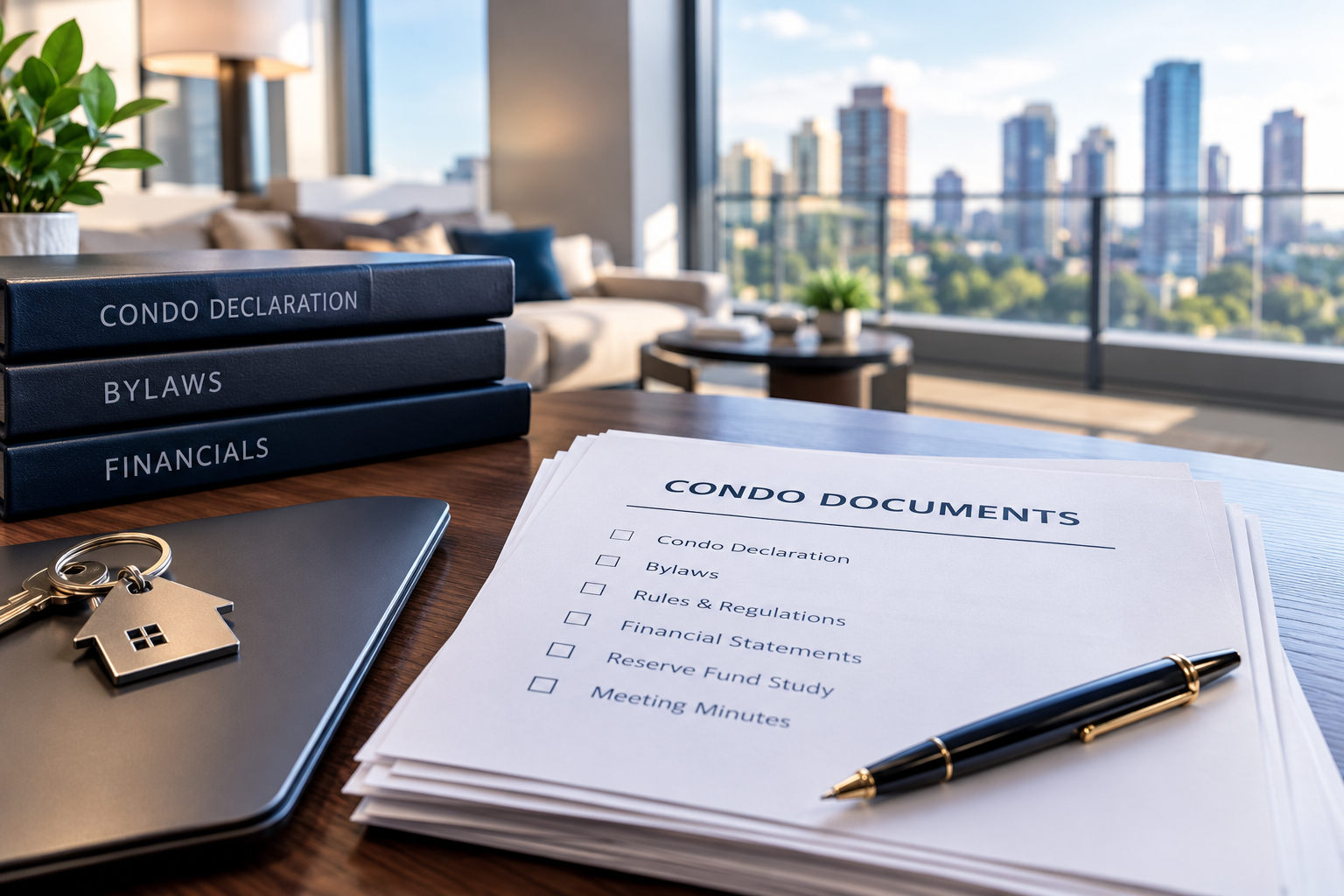
Buying a condo means buying two things: the unit, and a share of everything the building owes. You can walk through the unit in an afternoon. The building's finances, repair plans, and rules live in a stack of paperwork most buyers barely skim — and that stack is exactly where the expensive surprises hide.
A special levy for a new roof or parkade repair can run into the thousands per owner, and it lands on whoever holds title when it comes due. Reading the documents properly is how you find out before that's you. Here's what to request, what each piece actually tells you, and the signals that should make you slow down.
Why the Paperwork Matters More Than the Unit Itself
Two condos with identical floor plans and nearly identical prices can be completely different purchases. One building has a healthy reserve fund and a recent study behind it. The other has deferred repairs for years and is about to hand its owners a bill. None of that shows up in listing photos.
The documents also set the rules for how you're allowed to live there — pets, rentals, renovations, even who can occupy the unit. Finding that out after possession is too late to do anything about it.
Make the Documents a Condition of Your Offer
In Alberta, it's standard practice to make an offer conditional on reviewing the condo documents, the same way financing and inspection are conditions. Your agent sets a condition date that gives you real time to go through everything properly.
Two timing details worth planning around:
The corporation has up to 10 days to provide requested documents once you submit a written request, and can charge a reasonable fee for preparing them. The insurance policy specifically can take up to 30 days.
Ask before you write the offer, not after. Many sellers already have the document package prepared before listing — confirm with the listing agent so your condition period isn't spent waiting on paperwork.
For more on how condition periods and deadlines generally work, see our guide to making an offer.
The Full Document Checklist
The Reserve Fund Study Is the Document That Predicts Your Future Costs
The reserve fund is the building's savings account for major repairs and replacements — roofs, windows, elevators, boilers, parkades. Alberta requires a qualified person to conduct a reserve fund study at least every five years.
Three questions to run through when reading it:
How old is the study? A study sitting at four or five years old may be working from stale repair costs.
Is the fund keeping pace? Compare the current balance against what the study says should be there by now. A wide gap gets closed one way or another — usually through fee increases or a levy.
What's scheduled in the next five years? A roof or parkade membrane due soon with insufficient savings is the clearest warning sign available.
A well-run building isn't one with no upcoming repairs — it's one that knows exactly what's coming and has been saving accordingly.
Special Levies: Who's Actually on the Hook?
A special levy (sometimes called a special assessment) is an extra charge owners face when the reserve fund can't cover a cost. The corporation generally bills whoever owns the unit at the time the levy comes due — which makes timing a real negotiating point.
If the minutes show a levy already approved or actively being discussed, you can ask the seller to cover it, hold back funds at closing, or adjust the purchase price accordingly. Your lawyer handles the legal mechanics — your job is knowing about it before you remove conditions, which is exactly why the minutes matter as much as the financials.
Insurance: The Deductible Is the Detail Buyers Miss
The corporation insures the building; you insure your own unit and contents. Since 2020, Alberta rules let a condominium corporation recover its insurance deductible — up to $50,000 — from an owner when damage originates in that owner's unit.
In plain terms: if your dishwasher hose fails and floods three floors below, the building's deductible can become your personal bill. Check the deductible figure on the insurance certificate, then confirm your own condo policy actually covers that amount — a quick call to your insurance broker settles this.
Bylaws That Change How You Actually Live There
Read the bylaws specifically for anything that conflicts with your plans:
Pets — number, size, and type limits, and whether board approval is required
Rentals — whether renting out the unit is allowed, and whether short-term rentals are permitted (relevant if you're buying as an investment property)
Age restrictions — some buildings restrict residency to older adults; see our guide to downsizing and retirement living if that's the direction you're headed, and check carefully if it isn't
Renovations — what needs board approval, including flooring changes in noise-sensitive buildings
Parking & storage — guest parking rules, vehicle restrictions, and what's allowed on a balcony
Bareland Condos and Townhouses Work Differently
Many townhouses and some detached homes are structured as bareland condos — your unit is the land parcel itself, and you own the building sitting on it. Fees tend to run lower since the corporation maintains less, often just roads, landscaping, and snow removal.
For these, confirm exactly what the corporation maintains versus what falls to you — roof and siding responsibility often lands on the owner. A bareland condo also needs its own Real Property Report, the same as a detached house.
Buying New From a Developer
New condos come with an entirely different document set — the purchase agreement, proposed bylaws, the condominium plan, and any management or recreational agreements. Alberta gives buyers of new units a cooling-off right: you can cancel within 10 days of signing unless the developer provided the required documents at least 10 days before you signed. A lawyer should confirm exactly how this applies to your specific contract.
With a new building, there's no history of minutes or financials to review — so scrutinize the proposed budget closely instead. Fees set artificially low to help sales often climb noticeably after the first year or two.
Red Flags Worth Slowing Down For
Reserve fund study is more than five years old, or doesn't exist
Fund balance sits well below what the study recommends
Minutes reference a special levy, repeated leaks, or envelope problems
The corporation is in active litigation, or its deductible recently jumped
A significant share of owners are behind on fees
Documents are missing or slow to produce
Bylaws block something you specifically plan to do
One red flag alone isn't necessarily a dealbreaker — it's a signal to ask more questions and price the risk into your offer.
Who Should Actually Review These?
Read them yourself first, since only you know what matters for how you plan to live there. For the financial and legal layer, bring in help:
Your realtor — knows which buildings have a track record of issues and what's typical for the area
A condo document review service — reads the full package and provides a written summary, usually for a few hundred dollars
Your real estate lawyer — reviews the legal points before closing
Document review doesn't replace a home inspection — the inspector covers your unit, the documents cover everything else in the building.
FAQ
What condo documents should I review before buying in Alberta? At minimum: the estoppel certificate, reserve fund study/plan/annual report, financial statements and budget, meeting minutes, bylaws, insurance certificate, and the condominium plan. Ask specifically about lawsuits and structural reports too.
How long does it take to get condo documents in Alberta? The corporation must provide requested documents within 10 days of a written request; the insurance policy can take up to 30 days. Many sellers have the package ready before listing.
What is an estoppel certificate? A signed statement from the condominium corporation confirming the unit's current fees, how they're paid, and any amounts owing or interest accrued.
How often is a reserve fund study required in Alberta? At least every five years, conducted by a qualified person.
Who pays a special levy when a condo sells? Generally the owner at the time the levy is due. If one's approved or anticipated, buyers can negotiate for the seller to cover it or adjust the price.
Should I pay someone to review condo documents for me? For most buyers, yes — a professional review typically costs a few hundred dollars and can flag issues worth far more than that.
Start With the Right Building
Good condo buildings aren't hard to find in Edmonton — the documents are how you tell them apart from the ones to avoid. When you're ready to look, browse Edmonton condos or Downtown Edmonton, get pre-approved, and reach out about any specific building you're considering — we'll tell you what we already know about it before you write an offer.
This reflects Alberta Condominium Property Act requirements current as of the original publication — confirm current rules with a real estate lawyer before relying on them.
Haupt Phaneuf Real Estate Team | eXp Realty Canada 📍 271 Heath Rd NW, Edmonton, AB T6R 1V3 📞 (780) 993-8574